Self-Cleaning Screens
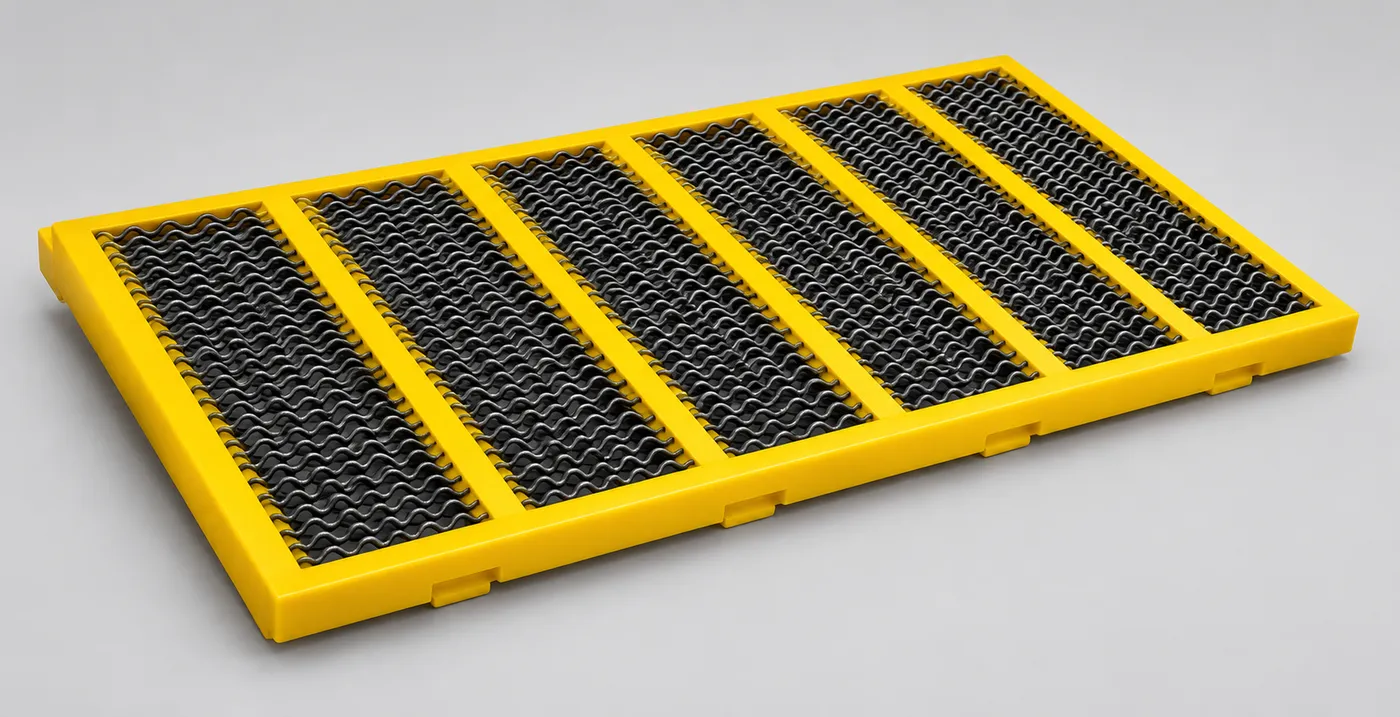
Modular Wave Self-Cleaning Screen Panel
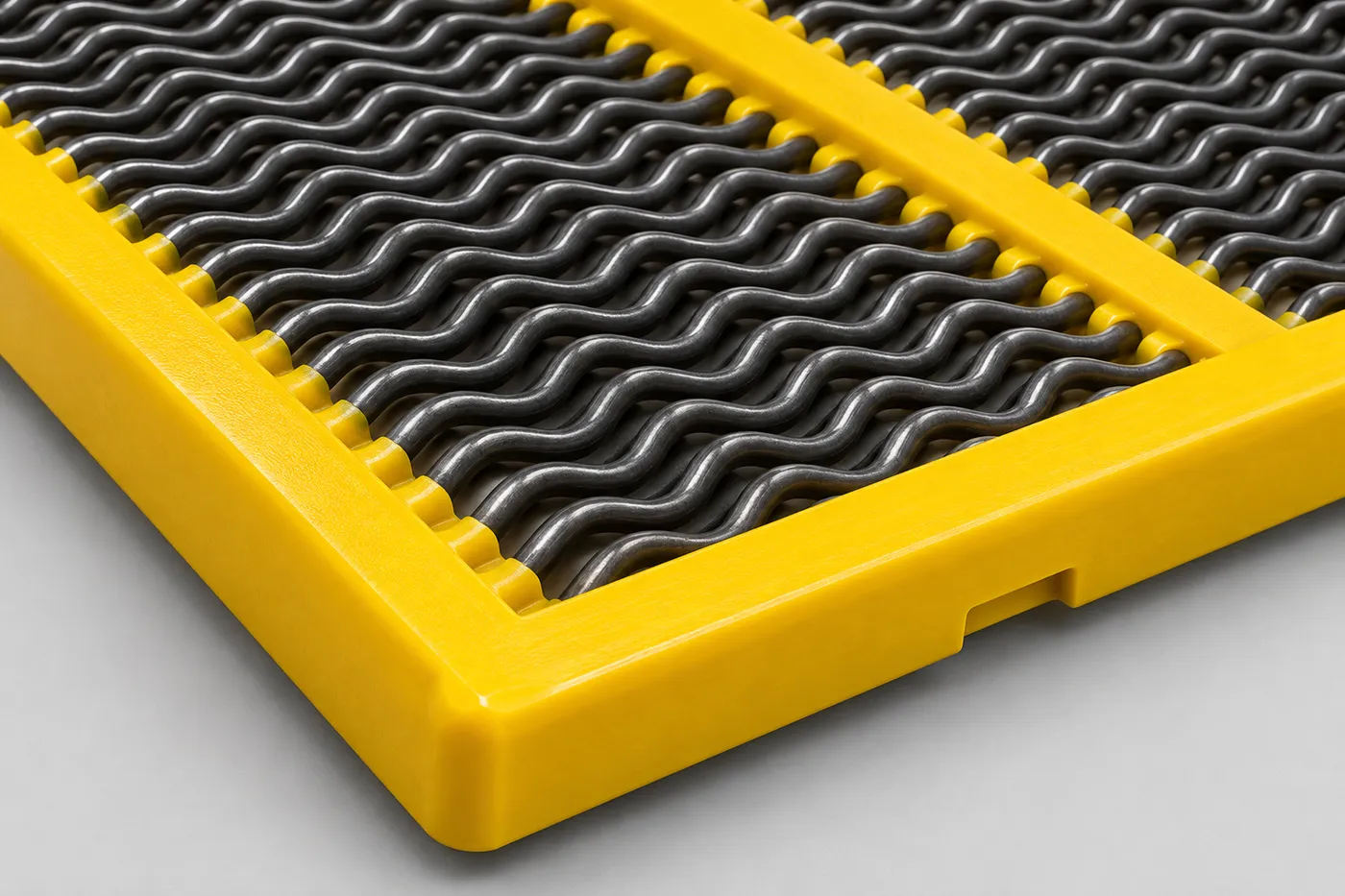
Wave-pattern self-cleaning wire moulded into a PU module for modular decks.
| Module sizes | 305 × 305, 305 × 610 mm and to suit |
|---|---|
| Wire | 65Mn or stainless |
| Fixing | Pin & sleeve or rail mount |
| Frame | Polyurethane |
A modular wave self-cleaning screen panel puts undulating wire media in a polyurethane frame for a modular deck. It is a candidate for areas where fines cling to the feed or openings become blocked, and the process benefits from a freer passage. The wave layout should be selected for the separation it produces, not simply as a substitute for any blocked module.
Screen Deck Parts Co., Ltd supplies replacement media made to order for sand, aggregate, mining and recycling plants. For this version, the enquiry should establish both the fines-removal objective and the details needed to seat the frame on your existing supports.
Define which material you are trying to clean
The wave pattern is often considered when the retained stream carries unwanted fines and a more permissive opening arrangement may help. Begin by describing that retained product, the contamination you need to remove and where material accumulates on the current deck. If the passing stream is itself a tightly specified product, include its limits too. A panel that stays visibly clearer is not necessarily an improvement if it lets unwanted fragments enter the wrong stream.
- Identify the stream whose quality matters most.
- Explain whether buildup follows wet weather, feed changes or a persistent material characteristic.
Check wave passage against irregular feed
The parallel crimped wires give wave media a passage characteristic different from diamond or triangle apertures. This can be useful for fines removal, but flakes and elongated pieces deserve closer examination. Tell us if those shapes are acceptable in the undersize, and provide representative photographs. When changing from a moulded PU module, compare the required separation rather than transferring its nominal aperture without review. The module frame determines fit; the wire pattern determines a different part of the process decision.
- Include a sample grading or the relevant product limits.
- Mark any particles that must remain on top of the deck.
Document the module and its orientation
The listed footprints are 305 × 305 mm and 305 × 610 mm, with sizes to suit, and wire options are 65Mn or stainless. Pin-and-sleeve and rail-mount versions are available subject to the proposed interface. Show the required feed direction and the current support arrangement on a plan. Even a square module needs an orientation reference when the working pattern and the supports are being discussed; do not leave its placement to an unlabelled photograph.
- Measure the frame thickness and engagement details.
- Provide top, underside and support views with matching orientation marks.
Plan the transition to the surrounding media
Wave modules may be reviewed for a limited area while serviceable PU panels remain elsewhere. Look at how the feed enters and leaves that area, whether adjoining edges meet properly and how the retaining components hold the frame. An exposed gap or mismatched seating profile can introduce bypass that obscures the screening result. Also describe high-impact zones and hot material before choosing a wire-and-PU assembly, so the local duty is considered alongside the desired passage.
- Show the edges of modules next to the proposed change.
- Separate blinding locations from locations suffering impact damage.
Evaluate a controlled change before repeating it
Order against an agreed module drawing and a defined cut requirement. Confirm the proposed wave aperture, wire diameter and usable screening area for this assembly before comparing it with the existing modules. After fitting in accordance with your deck procedure, compare the retained material, undersize grading and buildup pattern under similar feed conditions. Keep the accepted orientation and interface details with the result so the next spare reproduces the evaluated configuration rather than merely its outline dimensions.
- Send module quantity, process description and destination for a quotation.
- Record any movement, edge gap or retaining-part wear noticed during inspections.
Compare passage and grading on a modular deck
| Option | Best for | Trade-off |
|---|---|---|
| Diamond module | Balanced sizing on mixed particle shapes | More defined openings than wave media |
| Triangle module | A closer fine-material cut | Added straight wires reduce the emphasis on passage area |
| Piano-wire module | Straight-wire harp passage in a modular frame | Long slots need a separate particle-shape review |
Questions buyers ask
Does wave modular media have a published open-area percentage?
No single percentage is specified for this product. Aperture, wire size and the area occupied by its frame and supports all affect the usable surface. For a useful comparison, ask about the proposed module configuration and compare like-for-like deck coverage rather than relying on a percentage quoted for another screen.
Can these modules be fitted only where the deck blinds?
A targeted zone can be considered if its fixing arrangement and adjacent edges are compatible. Map the buildup area and show how material travels across it. The replacement plan should account for the surrounding panels, so a localized change does not create a bypass route or an unsuitable transition in the working surface.
Will wave modules pass long or flaky fragments?
They can present a more permissive passage than a tightly controlled diamond or triangle pattern, so irregular shapes need assessment. Provide the feed description and the particles that must be rejected. Where those pieces would contaminate a specified product, compare a different pattern before accepting wave modules for that duty.
Can I order by the existing module length and width?
Length and width are necessary, but they do not identify the fixing system. Add thickness, the underside engagement profile and details of the pins or rails. A photograph of the support with a module removed is particularly useful, as top-side dimensions can conceal important differences between apparently similar modular systems.
Request a quote: Modular Wave Self-Cleaning Panel
Related
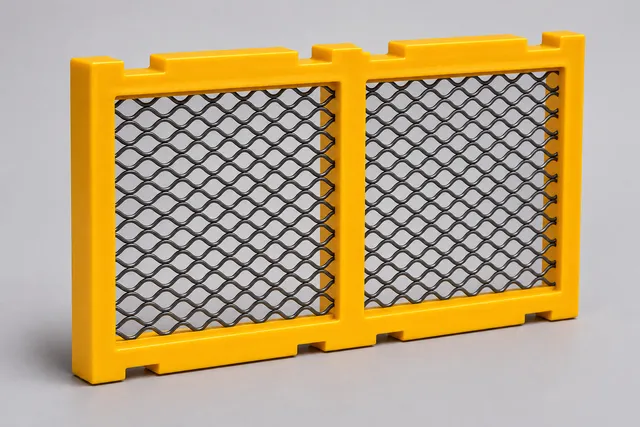
Modular Diamond Self-Cleaning Panel
Diamond-pattern self-cleaning wire moulded into a PU module for modular decks.
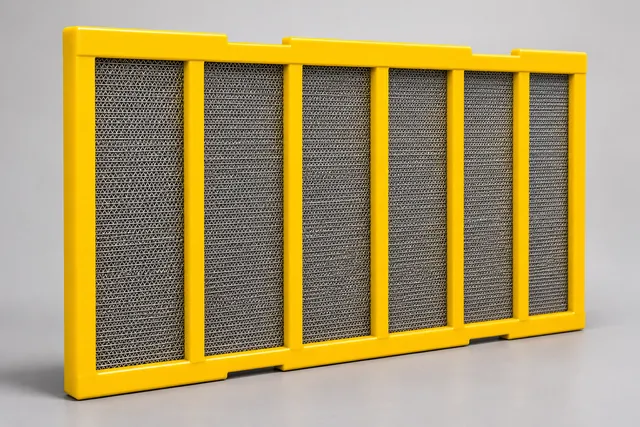
Modular Triangle Self-Cleaning Panel
Triangle-pattern self-cleaning wire moulded into a PU module for modular decks.
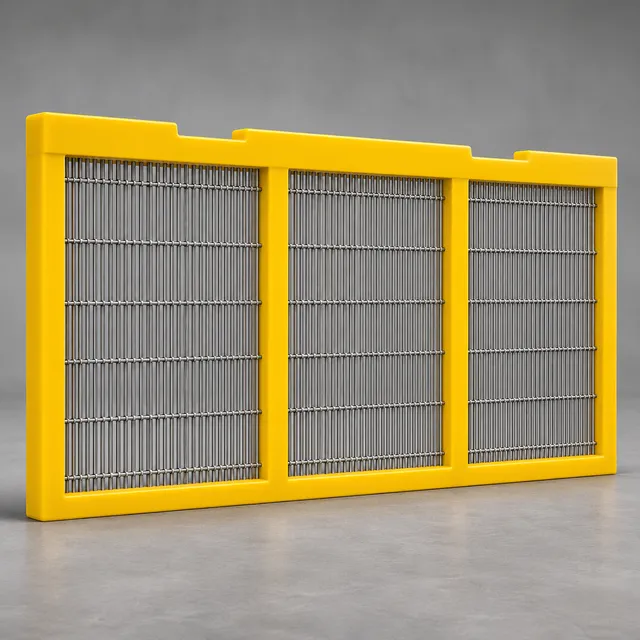
Piano Wire Module with PU Frame
Harp wires moulded into a polyurethane frame for modular deck systems.
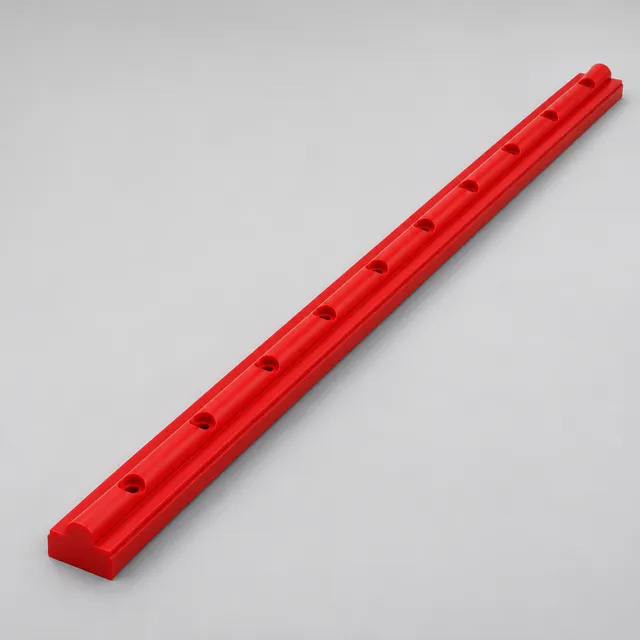
PU Rail Seats
Polyurethane rails that hold modular panels on the deck stringers.