Self-Cleaning Screens
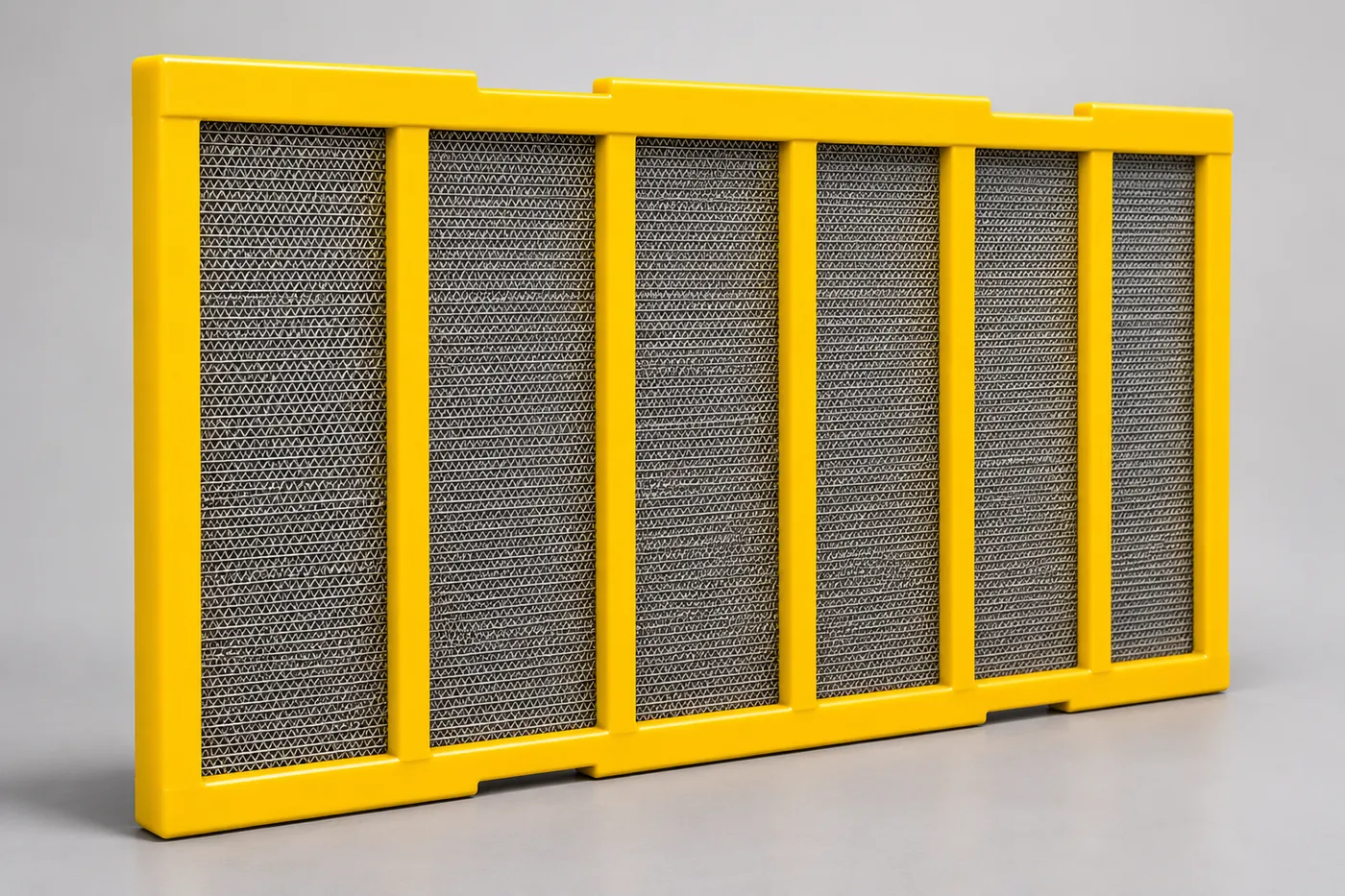
Modular Triangle Self-Cleaning Screen Panel
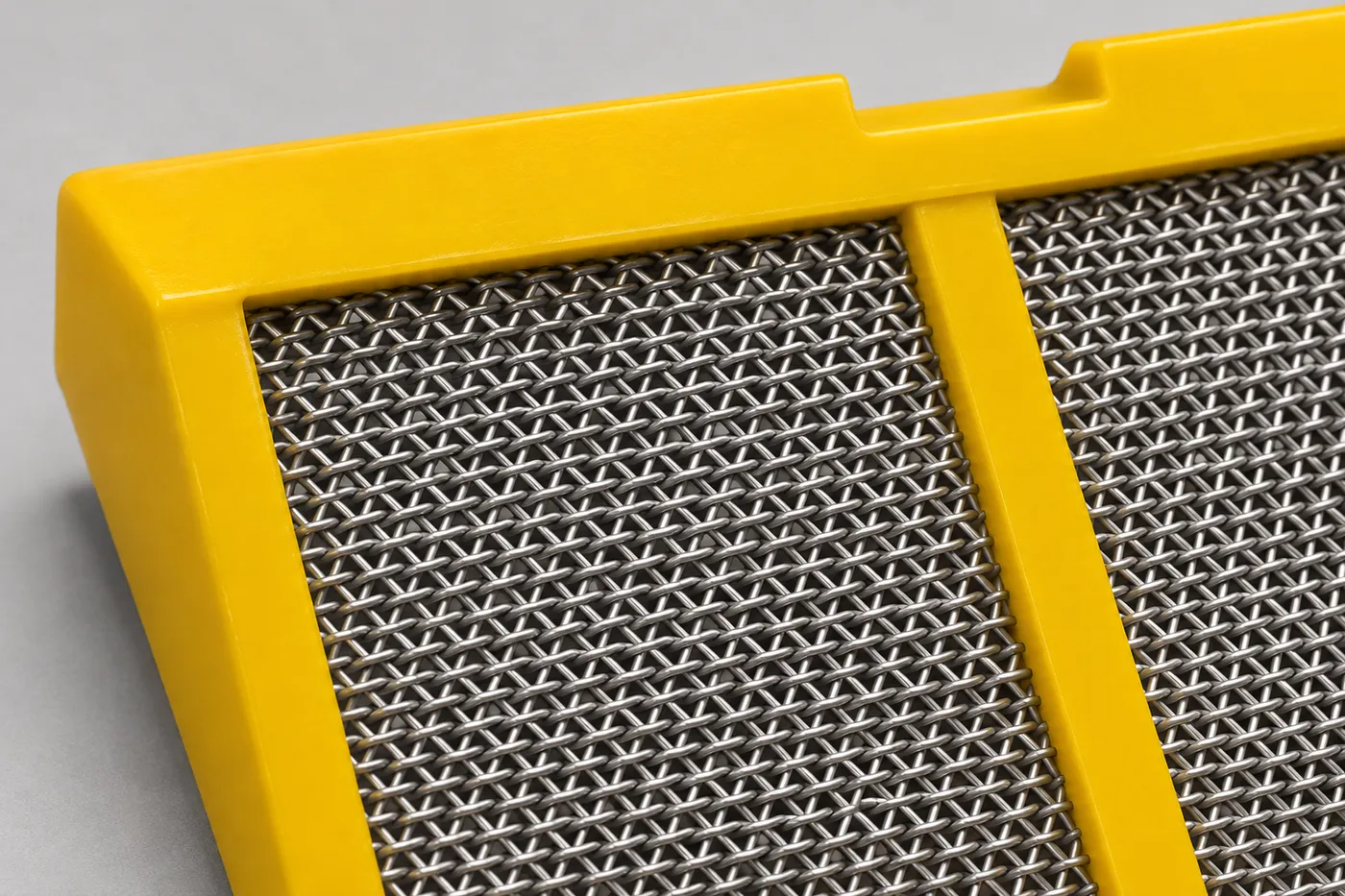
Triangle-pattern self-cleaning wire moulded into a PU module for modular decks.
| Module sizes | 305 × 305, 305 × 610 mm and to suit |
|---|---|
| Wire | 65Mn or stainless |
| Fixing | Pin & sleeve or rail mount |
| Frame | Polyurethane |
This modular self-cleaning screen panel combines a triangular wire pattern with a polyurethane perimeter frame. Alternating straight and crimped wires support a controlled passage, making it an option for damp fine material when a freer wave arrangement would not suit the required cut. The frame allows the working pattern to be considered for an existing modular installation.
For maintenance teams managing a difficult fine-screening zone, Screen Deck Parts Co., Ltd supplies made-to-order replacement media from the confirmed dimensions and process requirement. The order needs to define the triangular opening and the underside interface as separate, equally important details.
Give the fine cut priority in the selection
Triangle media is useful to discuss when losing the cut is as troublesome as losing capacity. The straight wires help support the crimped-wire arrangement, while the flexible lengths can move as the deck operates. That distinction matters in a modular system where a panel's familiar shape says little about its screening behavior. Explain whether fine oversize contamination, blocked apertures or a changing grading result is driving the replacement, and show the location of the problem on the deck.
- Describe the accepted grading of the passing stream.
- Identify near-size material that remains lodged in the current openings.
State the triangular aperture clearly
Use the required passing size as the starting point and have the aperture reference agreed in the proposed specification. Measuring the longest diagonal of a triangle can produce an ordering description that does not represent the desired cut. If the current module's designation is unclear, supply a close view and the previous specification rather than guessing from a worn opening. Where straight and crimped wires differ, both components should be identified when the proposed wire arrangement is confirmed.
- Keep aperture measurements distinct from the module footprint.
- Use an unworn reference or accepted drawing when available.
Check frame and retainer engagement
The supplied module sizes are 305 × 305 mm and 305 × 610 mm, with dimensions to suit your deck. Wire choices are 65Mn or stainless, with pin-and-sleeve or rail fixing arrangements. These options do not establish interchangeability with every modular system. Record the overall thickness, underside shape and retaining-component engagement. Include a view of a module seated correctly and another with the support exposed, so the proposed interface can be checked against the actual installation.
- Show worn rail seats or retaining parts that also need attention.
- Label the module's intended position and the direction of material travel.
Place the modules around the problem, not around a guess
A fine-cut problem may be concentrated in a particular area rather than distributed evenly. Mark that area on the deck plan and explain how neighboring panels perform. Triangle modules can then be considered as a targeted change while suitable media remains in place. Review the joins so unclassified material cannot avoid the working apertures. If the local duty includes hot material or concentrated feed impact, provide those conditions before the PU-framed construction is selected.
- Photograph the transition between the proposed zone and retained panels.
- Describe both temperature exposure and the point where feed lands.
Build an order record that protects repeatability
For quotation, send the frame dimensions and fixing details with the desired cut, wire preference, quantity and destination. Confirm aperture, wire diameter and PU suitability for the intended duty as part of the proposed module design. After replacement, compare the grading and buildup tendency before expanding the same layout elsewhere. Store the accepted panel drawing with the deck map so subsequent spare purchases preserve the evaluated opening and interface.
- Record which module positions were changed during the maintenance stop.
- Use the same sampling approach when reviewing the old and new arrangement.
Compare fine-sizing alternatives
| Option | Best for | Trade-off |
|---|---|---|
| Diamond module | Balancing passage area with classification | Does not include the triangle pattern's straight-wire component |
| Wave module | Cleaning fines from oversize | More permissive particle passage |
| PU-framed woven module | A defined woven opening on a modular deck | More restrained wire movement at crossings |
Questions buyers ask
Is triangular modular media different from ordinary PU panels?
Yes, the active screening surface here is a straight-and-crimped wire arrangement held within a PU frame. A moulded PU panel forms its working openings in the polymer itself. The materials may share a modular footprint, but their passage and movement differ, so evaluate the screening duty as well as the fit.
Why choose triangle instead of wave modules?
Triangle construction puts more emphasis on supporting a defined opening for sizing. Wave media is normally considered when fines removal and passage area take priority. If your passing product has narrow limits or contains unwanted irregular pieces, review the triangle option against those requirements before selecting a freer passage pattern.
Can I change modules without re-tensioning a full panel?
A correctly specified modular replacement is retained through its frame rather than fitted as a full hooked tensioned cloth. Follow the installed deck's replacement procedure and check its retainers. Local replacement still requires correct seating and compatible edges; it should not be treated as permission to fit a loosely matching module.
What should an enquiry include when the old module is worn?
Send the deck interface dimensions and views of the exposed supports, along with the least-worn module available. Add the intended passing size rather than measuring only an enlarged opening. Earlier drawings, part descriptions and a deck map help distinguish original geometry from damage that should not be reproduced in a replacement.
Request a quote: Modular Triangle Self-Cleaning Panel
Related
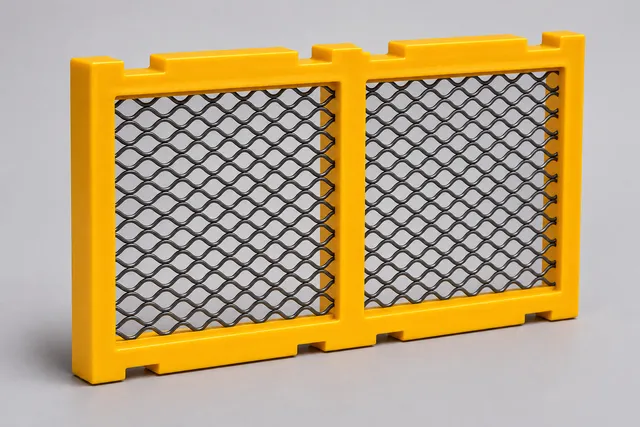
Modular Diamond Self-Cleaning Panel
Diamond-pattern self-cleaning wire moulded into a PU module for modular decks.
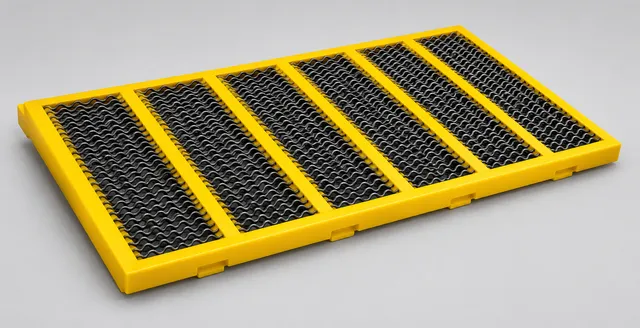
Modular Wave Self-Cleaning Panel
Wave-pattern self-cleaning wire moulded into a PU module for modular decks.
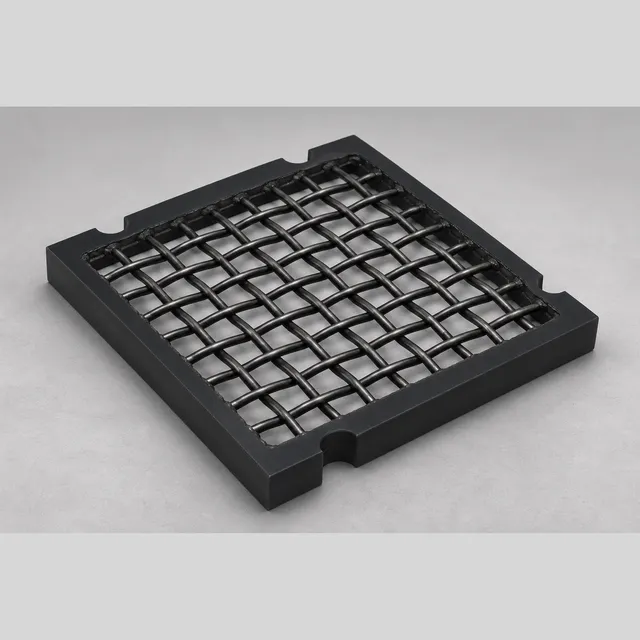
PU-Framed Woven Wire Module
Woven steel media moulded into a polyurethane frame to drop into modular decks.

PU Pins & Sleeves
Pin-and-sleeve fixings for modular polyurethane and rubber panels.