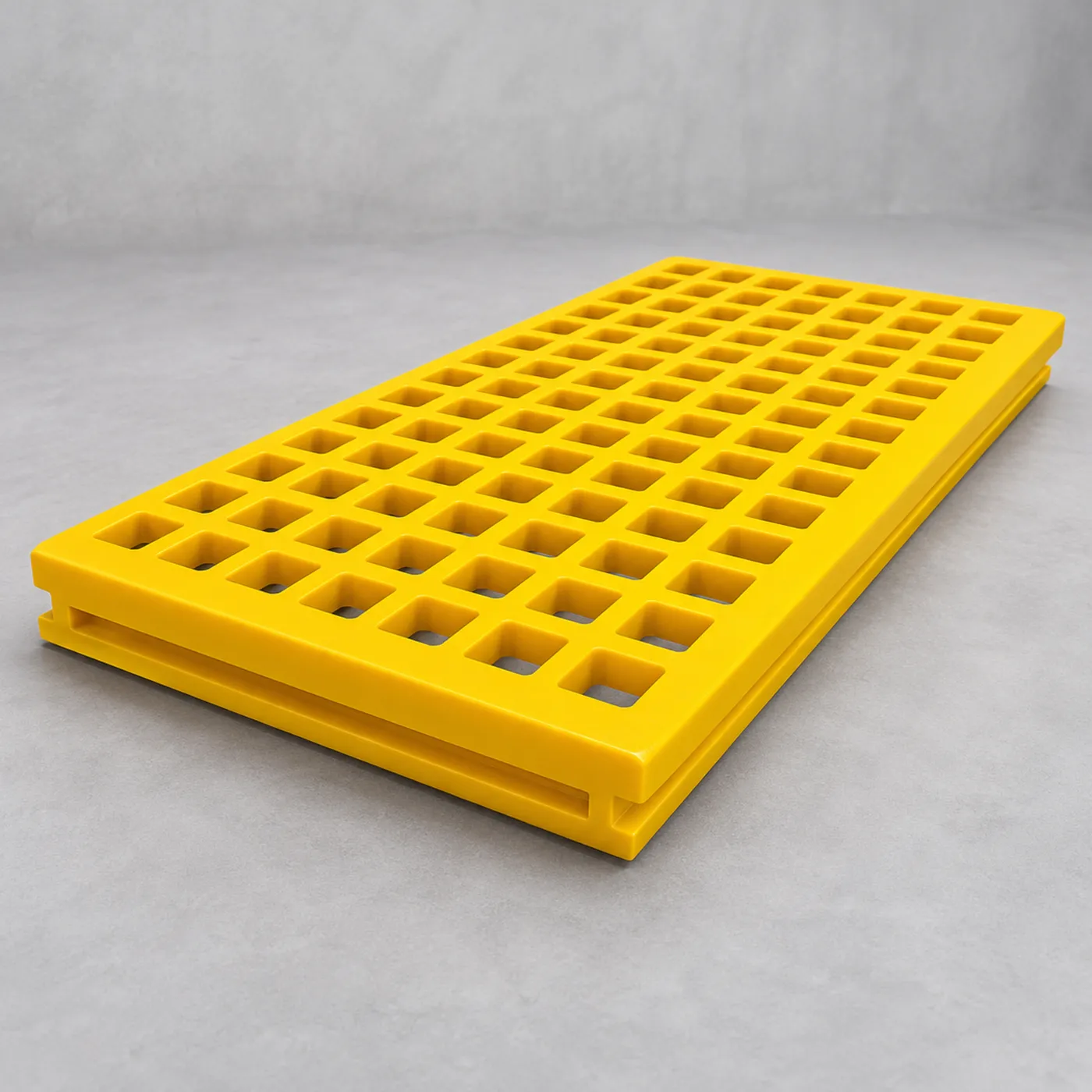
Polyurethane Screen Panels
Modular Polyurethane Screen Panels
Moulded PU modules that replace one worn panel at a time.
| Aperture | 0.15 – 200 mm |
|---|---|
| Thickness | 25 – 80 mm |
| Hardness | 60 – 95 Shore A |
| Standard sizes | 305 × 305, 305 × 610, 610 × 610 mm |
| Max custom | approx. 1800 × 1200 mm |
| Openings | Square, slot, round, herringbone, custom |
| Fixing | Pin & sleeve, rail, bolt-down, snap-in |
Polyurethane screen panels divide a vibrating deck into replaceable modules. You can change a worn feed section while leaving serviceable panels elsewhere, rather than replacing a complete screen cloth. Aperture shape, panel thickness and the fixing profile are specified together for the installed deck.
Screen Deck Parts Co., Ltd supplies made-to-order replacement screen media for quarry, mining, sand and recycling operators. These modular panels suit buyers managing uneven wear, wet screening or rinsing duties who need a replacement matched to existing supports and neighbouring modules.
Choose modules around the wear pattern
Start with a deck map showing where wear occurs. The feed end, transfer points and discharge area may need different treatment, even when the nominal aperture stays unchanged. Photograph the removed modules before disposal so the replacement enquiry captures the failure location as well as the opening size.
Modules give maintenance teams flexibility, but moving panels around requires compatible fixings and geometry. Check whether a panel has a directional slot, side overlap or other feature that prevents rotation. If impact is concentrated beneath a chute, a separate blank panel may be more appropriate than thickening every screening module.
Specify aperture and usable screening area
Our listed opening options include square, slot, round, herringbone and custom patterns. Select the opening around your separation requirement and particle shape. A nominal aperture alone does not describe the complete passage: web width, taper, screening thickness and the surrounding blank border also affect the working surface.
Ask for the open area of the proposed layout rather than applying a percentage from another module. Identify whether that figure refers to the perforated field or the whole panel footprint. A drawing that marks the opening pattern and solid mounting zones makes competing quotations easier to compare and helps explain differences between panels with similar names.
Match the polyurethane to the operating environment
The supplied hardness and thickness ranges describe available choices, not a single standard build. Tell us about sharp feed, sustained wet operation, temperature and any process chemicals. Polyester-based PU suits abrasive duty, while polyether-based PU is chosen where hydrolysis resistance matters; that distinction is a useful enquiry point rather than a guarantee for every polyurethane grade.
Include the condition of your current material in the discussion. Surface wear, splits around a fixing and general softening are different observations. Request confirmation of the proposed compound and reinforcement arrangement for your application instead of choosing solely by colour or by a hardness value from an unrelated deck.
Check the underside before ordering
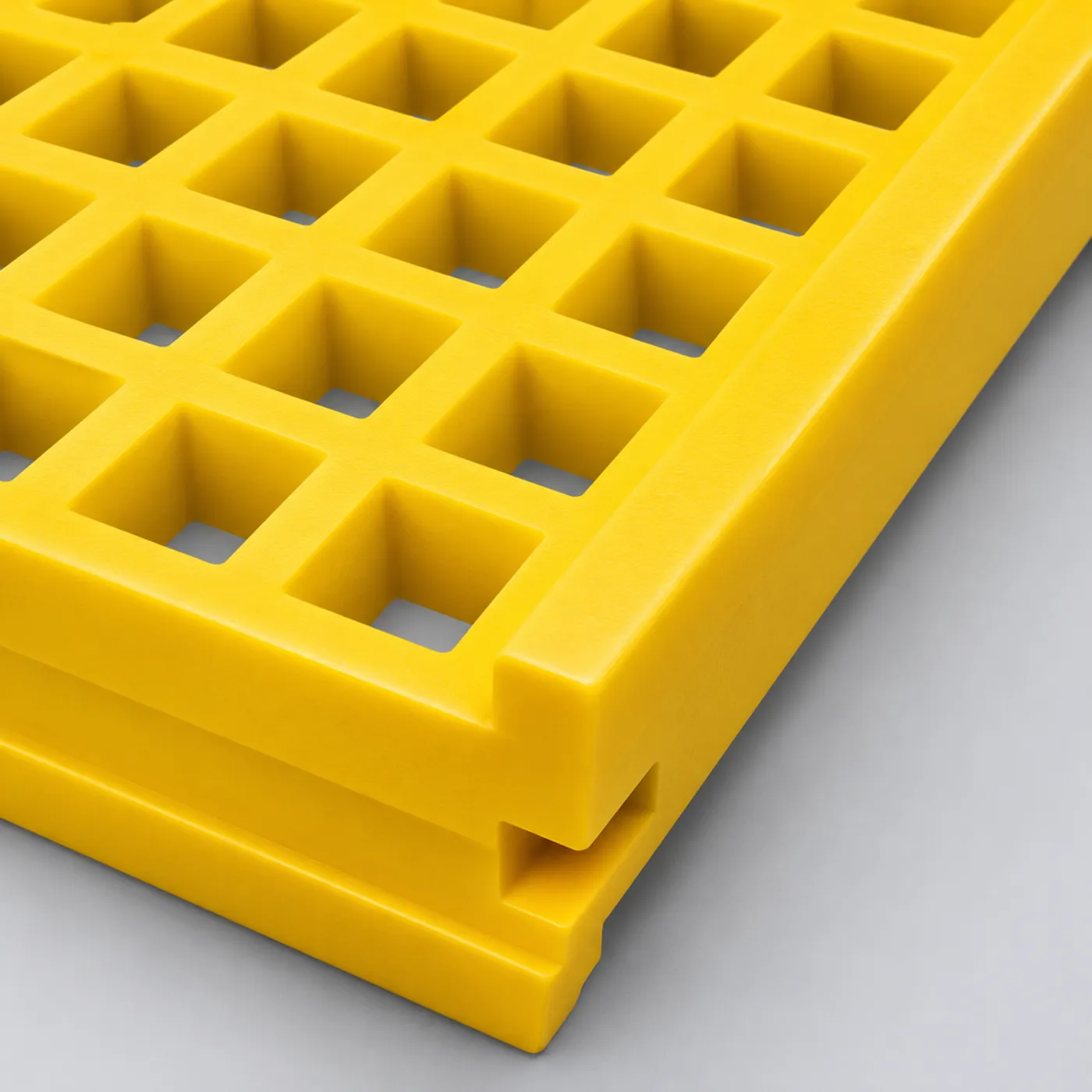
A module with the correct outside dimensions can still fail to seat on the support system. Pin-and-sleeve, rail, bolt-down and snap-in versions require different details. Show the underside, edge profiles and retaining components, and distinguish the module dimensions from the spacing of the supporting steel.
Inspect the neighbouring panels and support condition as part of the measurement. Worn seats or distorted rails can make an otherwise correct replacement appear loose. For mixed decks, identify adjoining wire modules, blank panels or dewatering sections so their installed height and edge contact can be reviewed together.
- Provide a top view with the feed direction marked.
- Include a side profile and underside photo beside a scale.
- Record fixing centres, recesses and any side overlap.
Build a useful replacement enquiry
Send the panel size, required aperture and shape, deck position, fastening method and quantity. Add the material being screened, its largest pieces, wet or dry condition and the main reason for replacement. A representative used panel or dimensioned drawing is more useful than a catalogue image that only resembles the surface.
Before approving the order, compare the proposed drawing against the actual deck and keep that drawing with the maintenance record. After installation, record fit, leakage at joints, product grading and where wear develops. Those observations help refine the next replacement without assuming that a material change alone will solve every process limitation.
Compare replacement screen media
| Option | Best for | Trade-off |
|---|---|---|
| Tensioned PU mats | Existing hook-tensioned decks | Replacement covers a larger cloth area |
| PU-framed woven modules | Wire screening within a modular grid | Exposed wire has different wear behaviour |
| Dewatering panels | Specified drainage slots on wet decks | Slot selection follows the drainage duty |
Questions buyers ask
What are polyurethane screen panels used for?
They are used as replaceable screening surfaces in aggregate, mineral and related bulk-material plants. This modular version is useful where wear varies across the deck or individual sections need replacement. Describe the material, separation target and wet or dry conditions so the opening pattern and panel construction can be reviewed for that specific duty.
How do I identify the correct fastening system?
Remove a serviceable reference panel during a planned stoppage and document its underside, edge shape and retaining parts. Measure the support arrangement separately from the outside footprint. Send photographs of the installed connection as well as the loose module; similar panel sizes can use different rails, pins or locking profiles.
Can these panels handle wet and dry screening?
Both are potential applications, but the same specification should not be assumed suitable for both. Wet duty introduces water exposure and drainage requirements, while dry feed may bring different impact and abrasion conditions. Include operating temperature and chemicals, if present, so the proposed polyurethane formulation and opening geometry can be checked.
How should I compare modules with woven wire?
Compare the complete deck arrangement, required grading and maintenance history. Woven wire and moulded PU create openings differently, so an identical nominal aperture does not establish equivalent performance. Review usable open area, feed behaviour and replacement effort, then assess the selected configuration against your operating results rather than a general service-life claim.
Request a quote: Modular Polyurethane Screen Panels
Related
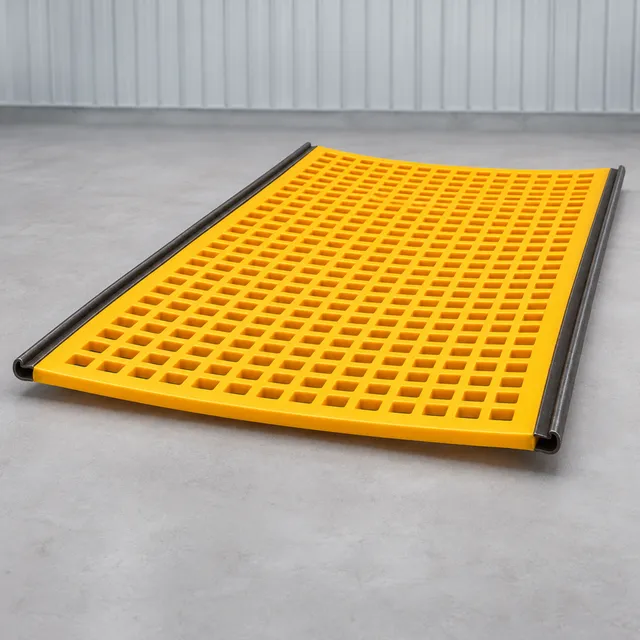
Tensioned Polyurethane Screen Mats
Rope-reinforced PU mats with steel hooks that fit cross- or side-tension decks.
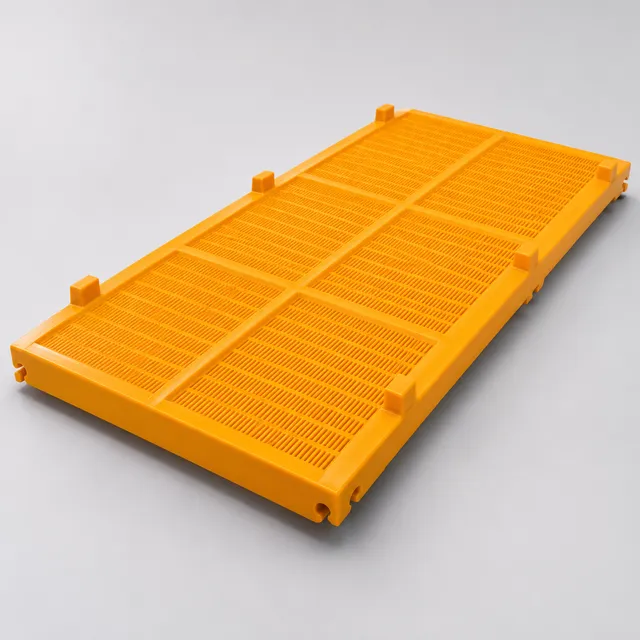
Polyurethane Dewatering Panels
Fine-slot PU panels for dewatering screens on sand, coal and mineral plants.
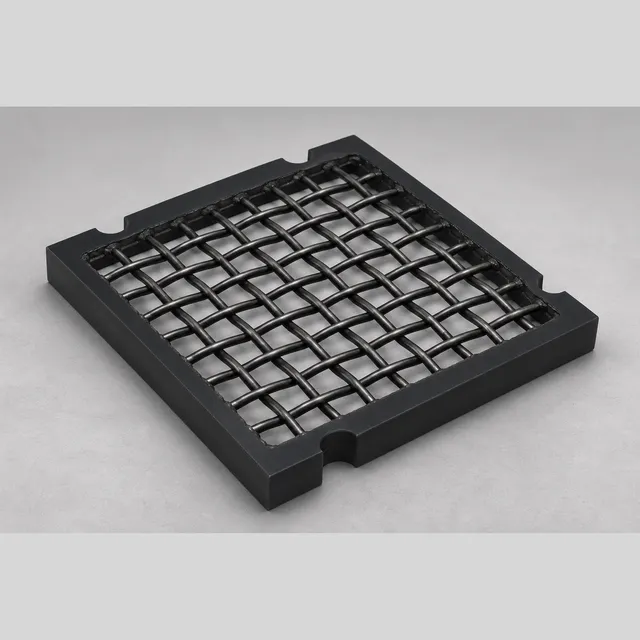
PU-Framed Woven Wire Module
Woven steel media moulded into a polyurethane frame to drop into modular decks.

PU Pins & Sleeves
Pin-and-sleeve fixings for modular polyurethane and rubber panels.